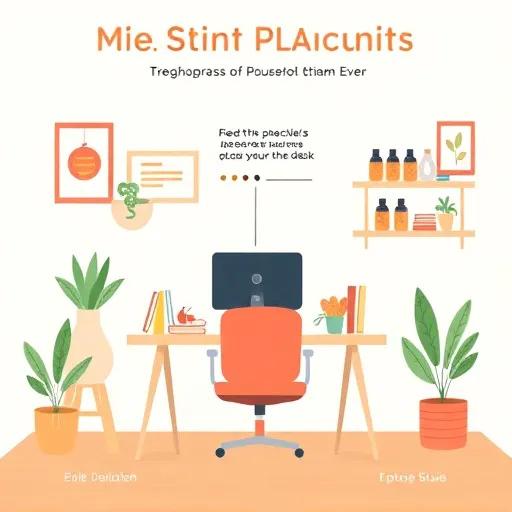
Desk placement affec
Why Desk Placement Matters More Than Ever
Let's be real—you probably spend six to nine hours a day within arm's reach of your desk. That makes it one of the most powerful workspace environments in your entire life. According to feng shui principles, where your desk sits determines how energy—or chi—flows around you. Get it wrong, and you'll feel exposed, scattered, or stuck. Get it right, and you create what practitioners call the command position: a spot where you feel grounded, in control, and ready to tackle whatever the day throws at you. That's exactly why these feng shui office desk placement tips matter more now than ever—especially with so many of us juggling hybrid schedules and shared spaces in 2026.
Here's the cool part: plenty of interior design experts and workplace wellness consultants have started saying the same thing using totally different vocabulary. Terms like "visual control," "prospect-refuge theory," and "cognitive load reduction" describe the exact same phenomenon. When you can see who's approaching and your back is against something solid, your nervous system relaxes. That's feng shui office desk placement tips in a nutshell—ancient wisdom dressed up in modern language.
The Command Position: Claiming Visual Control and Solid Backing in Your Workspace
If you only remember one of these feng shui office desk placement tips, make it this one. The command position is the single most important concept in desk arrangement. Here's what it looks like in practice:
- Face the door (or at least keep it in clear view). You don't need to stare at it all day, but it should be visible without twisting around. This creates a sense of visual control and dials down that low-grade anxiety of not knowing who or what is behind you.
- Put a solid wall behind you. This is the "mountain" in feng shui principles—a symbol of support and stability. Having your back to a wall instead of an open walkway helps you feel anchored.
- Don't sit directly in line with the door. Being in the direct path of the doorway is called being "in the line of fire," and many practitioners believe it makes you feel rushed and exposed. Ideally, position yourself diagonally from the entrance.
In 2026, with open-plan offices and shared co-working spaces still super common, achieving the command position can feel tricky. If you can't move your desk, try a privacy screen or a tall plant behind you to simulate that solid backing. It sounds small, but workspace wellness specialists repeatedly note the difference it makes in perceived stress levels—and that's one of the most underrated feng shui office desk placement tips out there.
Common Desk Placement Mistakes: Backing the Door, Blank Walls, and Cluttered Corners to Avoid
Let's talk about the placement choices that quietly work against you. Lots of people set up their desks without thinking twice, then wonder why they feel restless or unproductive. According to feng shui office desk placement tips, here are the setups to steer clear of:
1. Backing the door. Sitting with your back to the entrance is one of the most frequently cited no-nos. It creates a subtle sense of vulnerability—your body knows someone could appear behind you at any moment. A senior practitioner once described it as "trying to concentrate while someone stands silently behind you." Not exactly ideal for focus and concentration.
2. Facing a blank wall. On the flip side, staring at a bare wall all day stifles inspiration. In feng shui, a completely blank wall in front of you represents a "dead end" for energy and ideas. If you have no choice, hang something that inspires creativity—an artwork, a vision board, or a well-organized pinboard. Your workspace environment should stimulate thought, not squash it.
3. The under-stairs or sloped-ceiling trap. Sloped ceilings and low overhead structures are believed to compress energy and create pressure. If you work in a room with a sloped ceiling, position your desk where you have the most headspace. This ties directly into the idea that your surroundings shape how you feel—something every environmental psychologist would nod along to.
4. Windows at your back. A window behind you sounds lovely in theory, but feng shui office desk placement tips generally advise against it. You can't see what's outside, glare becomes an issue, and the "backing" of your position is unstable. If a window view is your thing, put it to your side or in front of you.
5. Cluttered and cramped corners. A desk crammed into a dark, cluttered corner is a recipe for stagnant energy. Clutter is one of the biggest enemies of workspace wellness—and a growing body of research on cognitive load backs this up. A cluttered desk literally taxes your brain's processing power.
Energy Flow Positioning: Creating a Bright Hall Entry and Mindful Door Distance
Once you've nailed the command position, there's more you can do. Feng shui principles offer guidance on how your desk interacts with the rest of the room and the people in it—and these feng shui office desk placement tips go beyond just where you sit.
Create a clear, purposeful entry. The area directly in front of your desk should be clear and open. This is sometimes called the energy zone or "bright hall." Think of it like a front porch for your productivity—welcoming, uncluttered, and easy to move through. In an open-plan workspace, this might mean keeping the area in front of your desk free of bins, boxes, or rolling carts.
Mind your distance from the door. Too close, and you'll feel exposed to every passing footstep. Too far, and you're tucked away in a forgotten corner. Practitioners of feng shui suggest finding a middle ground—far enough to feel settled, close enough to feel connected. This balance is a recurring theme in feng shui office desk placement tips and pairs well with modern office ergonomics guidance.
Use plants to soften harsh lines. Plants are a staple of feng shui. They introduce living energy, soften sharp corners (known as "poison arrows"), and improve air quality. A tall leafy plant placed behind you can simulate a supportive wall, while a smaller one near the front of your desk can create a gentle buffer. Just keep them healthy—drooping, dying plants are considered a drain on energy.
Desk Shape, Natural Materials, and Directional Orientation for Balanced Energy
Placement isn't only about location—it's also about the desk you're placing. These feng shui office desk placement tips extend to the furniture itself.
- Choose rounded or curved edges when possible. Sharp corners create "poison arrows" that point disruptive energy toward you. If your desk has sharp corners, position plants or soft accessories to soften them.
- Wood and natural materials are favored in feng shui for their grounding, growth-associated energy. In 2026, sustainable and reclaimed wood desks are both trendy and tradition-approved—a rare win-win.
- Keep the desk surface purposeful. The desk surface is your immediate energy field. Reserve the center for your work and keep clutter to the edges. Many workspace wellness specialists recommend the "clear desk" policy for at least ten minutes at the start and end of each day.
- Orientation matters. Different directions are associated with different types of energy in feng shui principles. Facing east, for example, is linked to growth and new beginnings, while facing north is associated with focus and calm. If you have flexibility, experiment with what feels best—sometimes the feng shui office desk placement tips that resonate most are the ones your body tells you, too.
Hybrid Workspace Adjustments: Mirrors, Rugs, and Monitor Placement for Small Spaces
Here's something encouraging: the worlds of office ergonomics and feng shui are converging fast. In 2026, more design professionals and workplace strategists weave these traditions together rather than treating them as opposites. After all, both aim to reduce stress, improve focus and concentration, and support productivity and efficiency.
If you're working from a kitchen table or a shared corner of the living room, don't despair. Here are a few adaptive feng shui office desk placement tips for less-than-ideal spaces:
- Use a mirror strategically. If you can't face the door, a small mirror angled to reflect the doorway can restore a sense of the command position.
- Define your zone with a rug. In an open-plan workspace or a multi-use room, a rug under your desk visually "anchors" the workspace and tells your brain "this is work mode."
- Turn your desk to the side when needed. Remote workers who share a dining table can at least sit with their back to a wall and their dominant side open—a partial command position is better than none.
- Position your monitor thoughtfully. The monitor should be centered and slightly below eye level—good for your posture and, per feng shui principles, good for balanced energy flow around your headspace.
Want a fast reference? Run through this quick checklist of feng shui office desk placement tips in five minutes:
- ✅ You can see the door without turning around
- ✅ Your back is supported by a solid wall or tall furniture
- ✅ You're not directly in line with the doorway
- ✅ The space in front of your desk is open and clear
- ✅ Sharp corners near your seat are softened with plants or fabric
- ✅ Natural light reaches your desk without glare
- ✅ Your desk surface is clutter-free and intentional
- ✅ At least one living plant or natural element is nearby
- ✅ Your chair faces a direction that feels energizing to you
- ✅ The overall workspace environment feels calm, not chaotic
The beauty of feng shui office desk placement tips is that they don't require a renovation budget. Most of these adjustments cost nothing—a few minutes of repositioning, a plant, a decluttered surface. Yet the payoff can be significant. A more intentional workspace environment supports focus and concentration, reduces stress, and helps you approach your work with a clearer head. In 2026, when attention is the scarcest resource around, that's no small thing. So try a few of these feng shui office desk placement tips this week—move your desk into the command position, clear the clutter, add a plant, and see how your workday shifts. Sometimes the smallest environmental nudge makes the biggest difference.