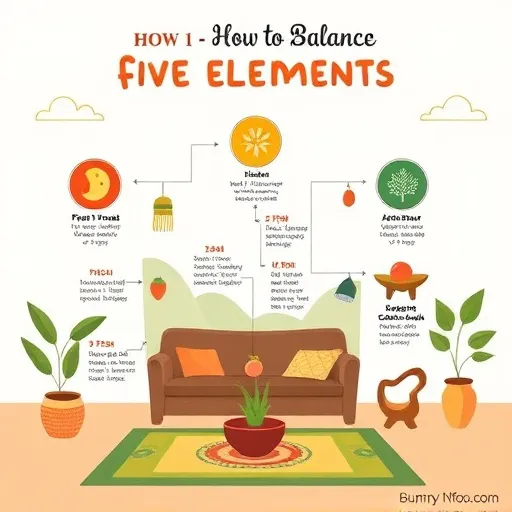
Five elements in hom
What Are the Five Elements, Really?
Before we dive into the practical stuff about how to balance five elements in your home, let's talk about what we're actually dealing with here. The five elements framework — something you'll hear a lot about in traditional Chinese philosophy, feng shui practice, and modern interior design conversations — describes five fundamental types of energy: wood, fire, earth, metal, and water. Each one represents a quality or vibe rather than a literal physical object. Wood is all about growth and expansion. Fire brings passion and visibility. Earth delivers stability and nourishment. Metal offers clarity and structure. And water represents flow and introspection.
So why does this matter when you're thinking about how to balance five elements in your home? Here's the thing: every single room in your house has a dominant energy whether you planned it that way or not. A home office packed with screens, cables, and sharp angles? That's heavy metal and fire energy working overtime. A bedroom drowning in beige tones and soft linens? That's earth-dominant for sure. The whole point of how to balance five elements in your home isn't to eliminate any single element — it's about creating a balanced interplay so no one energy completely overwhelms the others.
According to one seasoned practitioner in environmental psychology, "People intuitively sense when a room feels off, but they rarely have the language for it. The five elements give you a vocabulary for what your body already knows." That's the real value here — it's way less mystical and way more about spatial awareness and intentional design. Understanding how to balance five elements in your home is basically learning to read what a space is telling you.
The Productive Cycle and Destructive Cycle: Your Ultimate Cheat Sheet for Elemental Harmony
You can't balance something you don't understand, right? The five elements operate on two cycles that explain almost every interaction happening in your home. Knowing these cycles is step one for how to balance five elements in your home effectively.
The Productive Cycle (Supporting Energy)
- Wood feeds fire — plants and wooden furniture add warmth and life to a space
- Fire creates earth — ash becomes soil; warmth creates stability
- Earth bears metal — solid ground holds and refines metal
- Metal carries water — a vessel channels flow
- Water nourishes wood — hydration enables growth
The Destructive Cycle (Controlling Energy)
- Wood parts earth — roots break through soil
- Earth absorbs water — soil dams a stream
- Water extinguishes fire — obvious enough
- Fire melts metal — heat softens structure
- Metal cuts wood — an axe fells a tree
Think of the productive cycle as your design ally and the destructive cycle as the thing to avoid over-using. A little tension is fine — even interesting — but too much of it creates rooms that feel uncomfortable without anyone knowing why. This is a core principle behind how to balance five elements in your home without going overboard.
Room-by-Room Guide: How to Balance Five Elements in Your Home for Living Rooms and Bedrooms
Okay, let's get practical about how to balance five elements in your home. The key principle: identify what's dominant, then introduce the element that supports or gently counterbalances it.
The Living Room: Your Social Energy Hub
Living rooms tend to be fire- and metal-heavy in modern homes — think flat screens, statement lighting, sleek furniture. That's a lot of intensity. To soften things up when figuring out how to balance five elements in your home:
- Add wood through a real houseplant, a wooden coffee table, or a natural fiber rug
- Introduce earth with ceramics, stone coasters, or warm-toned textiles in clay and terracotta shades
- Keep water subtle — a small fountain is fine, but a massive aquarium in a small room creates imbalance
A well-balanced living room should feel warm but not chaotic. If you find yourself feeling restless there, you probably have too much fire. If it feels flat and lifeless, you're low on wood. This kind of spatial awareness is exactly what how to balance five elements in your home is all about.
The Bedroom: Rest and Restoration
This is where most people get it wrong when learning how to balance five elements in your home. Bedrooms are for rest, which means you want to dial down fire (stimulation) and metal (sharpness) while leaning into earth and soft wood. Practical moves:
- Choose earth tones — oatmeal, sand, mushroom — for bedding and walls
- Use wood furniture with rounded edges rather than glass and chrome
- Remove or cover screens; a television is a fire element that fights sleep
- Avoid mirrors facing the bed — a classic metal/water imbalance that disrupts restfulness
One industry pro I spoke with put it simply: "Your bedroom should feel like a cave, not a command center." That's earth energy in a nutshell, and it's a golden rule for how to balance five elements in your home.
Kitchens and Home Offices: Advanced Tips for How to Balance Five Elements in Your Home
The Kitchen: Where Fire Meets Water
Kitchens are naturally fire-dominant (cooking) with heavy water presence (sinks, refrigerators). The tension between those two can make the space feel chaotic. Balance comes through earth (wooden cutting boards, ceramic tiles, stone countertops) and metal (clean lines, organized storage). Keep the fire and water zones physically separated where possible — a sink directly opposite a stove creates perpetual energetic conflict. That's a super practical tip for how to balance five elements in your home without major renovations.
The Home Office: Clarity Without Coldness
2026's hybrid work reality means home offices carry enormous weight. Too much metal (monitors, cables, sharp desk edges) creates a cold, anxious vibe. Too much fire (bright screens, aggressive lighting) burns you out. The fix for how to balance five elements in your home office setup:
- Add wood — a plant on the desk, a wooden organizer, natural light
- Introduce earth — a textured rug, ceramic pen holder, warm desk lamp
- Keep water minimal but present — a small glass of water or a subdued blue accent
These are small changes with outsized impact. Try it for a week and notice how your focus shifts. It's amazing what happens when you actually apply how to balance five elements in your home principles to your workspace.
Quick Reference: Element Signatures in Design and Common Balancing Mistakes
Not sure what you're looking at? Here's your cheat sheet for identifying each element through design choices:
- Wood: Plants, timber, green tones, vertical lines, organic shapes
- Fire: Lighting, candles, reds and oranges, triangles, screens, heat sources
- Earth: Ceramics, stone, beige and brown, squares, low furniture, heavy textures
- Metal: Chrome, white and gray, circles, precision, minimalism, appliances
- Water: Glass, mirrors, blues and blacks, wavy lines, reflective surfaces, fountains
Walk through your home with this list in mind. You'll probably spot an overrepresentation of one or two elements immediately — most modern interiors skew heavily metal and fire. Recognizing this is a huge step toward how to balance five elements in your home.
Common Mistakes When Balancing Elements
Overcorrecting: If your home feels cold and metallic, don't dump a jungle of plants into every corner. That creates a wood overload and a different kind of imbalance. Add one or two wood elements, live with them for a week, then reassess. Patience is key with how to balance five elements in your home.
Ignoring Function: A bathroom doesn't need fire energy just because it's water-dominant. Bathrooms are supposed to be cool, cleansing spaces. Balance doesn't mean equal parts of everything — it means appropriate proportion for the room's purpose.
Forgetting the Outdoors: Your windows and sightlines matter. If your living room window faces a brick wall, you're receiving earth energy whether you like it or not. Consider how natural light and views affect the elemental mix, and compensate indoors accordingly.
Treating It as Purely Decorative: The five elements framework works best when it informs how you use a space, not just how it looks. A candle you never light doesn't contribute fire energy. A plant you neglect creates stagnant wood energy. Intentionality matters more than objects — that's the heart of how to balance five elements in your home.
Bringing It All Together: A Simple Action Plan for How to Balance Five Elements in Your Home
You don't need to renovate. Here's a realistic sequence for rebalancing your home over a few weeks:
- Audit each room using the element signatures list. Note what dominates.
- Identify the missing element that would best support the room's function.
- Add one or two items representing that element — nothing drastic.
- Live with it for a week and notice how the room feels.
- Adjust — remove what creates tension, add what creates ease.
This iterative approach beats any one-time overhaul. Rooms evolve with you, and the five elements framework is flexible enough to evolve too. That's the beauty of how to balance five elements in your home — it's a process, not a one-and-done project.
We're living through a moment where our homes carry more functional weight than ever — office, gym, social venue, retreat. The lines between spaces have blurred, and that blurring creates energetic chaos. Balancing the five elements isn't about superstition; it's about intentional design that supports how you actually live. One well-known platform focused on home wellness recently reported a significant rise in searches for "energy-balanced interiors" and "elemental home design" — signaling that people are hungry for frameworks that go beyond aesthetics. And honestly? That tracks. When the outside world feels unpredictable, we crave environments that feel coherent.
The five elements give you a coherent language for that craving. Start small. Pick one room. Notice what's dominant, add what's missing, and pay attention to how the space responds. You might be surprised how much shifts — not because of magic, but because you finally gave your home the balance it was quietly asking for. Your home is not just a container for your stuff. It's a living system of energies, and you're the one who gets to tune it. So go ahead — master how to balance five elements in your home. Your future self, curled up in a genuinely harmonious living room, will thank you.