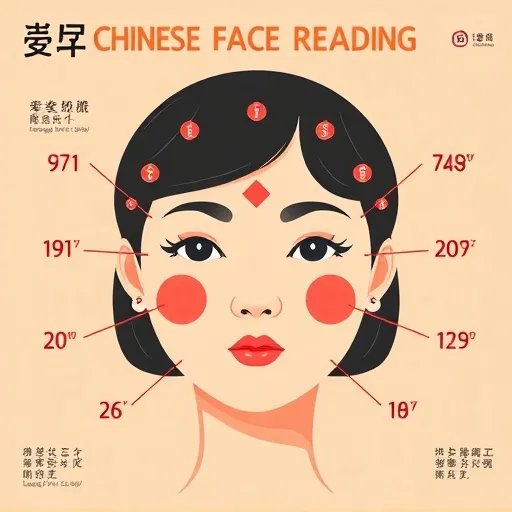
Chinese face reading
What Is Chinese Face Reading, Exactly?
Chinese face reading—known as physiognomy or mian xiang—is a traditional system that maps different regions of the face to aspects of a person's destiny, temperament, and well-being. It's rooted in the same philosophical framework as traditional Chinese medicine and feng shui—the idea that qi (energy) flows through the body and manifests outwardly in our physical features. When you're learning how to read face shape in chinese face reading, you're essentially learning to interpret that outward flow of energy.
Unlike modern personality tests, face reading doesn't rely on questionnaires. Instead, it treats the face as a living map. Each feature—the forehead, eyes, nose, mouth, jawline—corresponds to specific life areas such as career, relationships, wealth, and health. And the overall face shape acts as the frame that contextualizes everything else. That's exactly why understanding how to read face shape in chinese face reading is typically step one.
As one seasoned practitioner in the field puts it: "You can't read the eyes without first understanding the architecture around them." This principle is the foundation of how to read face shape in chinese face reading—face shape analysis always comes first.
Why Face Shape Matters So Much in Chinese Physiognomy and Elemental Balance
In Chinese face reading, face shape isn't just about aesthetics. It's believed to reflect the underlying elemental balance of a person—whether they lean toward wood, fire, earth, metal, or water energies. Each shape carries a distinct energetic signature that influences how a person thinks, acts, and relates to others. Knowing how to read face shape in chinese face reading gives you access to that signature.
Here's the key insight: face shape gives you the baseline reading. Individual features add nuance, but the shape tells you the broad strokes of someone's temperament. Think of it like reading a book—the face shape is the genre, and the features are the plot details. This is the core logic behind how to read face shape in chinese face reading.
Modern physiognomy enthusiasts often cross-reference traditional shape meanings with observational psychology. While no one claims face shape is destiny, many find the correlations intriguing and even useful in interpersonal contexts.
The Five Core Face Shapes and Five Elements in Chinese Face Reading
Traditional Chinese face reading categorizes faces into five primary shapes, each associated with one of the five elements. Learning how to read face shape in chinese face reading means mastering these five archetypes.
1. Round Face (Water Element) and Its Adaptable Social Instincts
A round face features soft, curved contours with roughly equal width and length. The cheeks are full, and the jawline is gentle rather than angular. In Chinese face reading, this is the classic water element shape.
Traditional meaning: Water-element faces are associated with adaptability, empathy, and strong social instincts. People with round faces are often described as approachable, intuitive, and emotionally attuned. They tend to go with the flow and build strong networks.
Practical read: If you're meeting someone with a distinctly round face, expect a warm communicator who values harmony. In career contexts, they often thrive in roles involving people—sales, counseling, teaching, or partnership-driven ventures. This is a perfect example of how to read face shape in chinese face reading in real life.
One caveat: round-faced individuals may also be prone to indecision or over-accommodation, according to traditional interpretations. Balance is key.
2. Square Face (Earth Element) and Its Grounded Determination
Square faces have a strong, broad forehead matched by a wide, angular jawline. The sides of the face are relatively straight, giving a box-like impression. This is the earth element archetype in Chinese face reading.
Traditional meaning: Earth-element faces signal reliability, determination, and practicality. This shape is linked to people who are grounded, hardworking, and steadfast. They're the "salt of the earth" types—loyal, dependable, and often stubborn.
Practical read: Square-faced individuals are typically seen as natural leaders or builders. They value stability and prefer clear plans over improvisation. In relationships, they're loyal but may struggle with flexibility. Understanding how to read face shape in chinese face reading helps you anticipate these traits.
Industry professionals often note that square face shapes appear frequently among entrepreneurs and project managers—roles demanding persistence and structure.
3. Oval or Egg-Shaped Face (Wood Element) and Its Creative Curiosity
The oval face is slightly longer than it is wide, with gently rounded contours and a balanced forehead-to-chin ratio. It's often considered the "classic" face shape. In Chinese face reading, this represents the wood element.
Traditional meaning: Wood-element faces are associated with growth, creativity, and intellectual curiosity. People with oval faces are often perceived as thoughtful, adaptable, and visionary. They tend to be lifelong learners.
Practical read: Oval-faced individuals often excel in creative or strategic roles. They're good at seeing the big picture and adapting to change. However, traditional readings suggest they may sometimes overthink or scatter their energy. This nuance is what makes how to read face shape in chinese face reading so fascinating.
This shape is frequently praised in face reading circles as balanced and versatile—a shape that plays well with others.
4. Heart-Shaped Face (Fire Element) and Its Charismatic Ambition
Heart-shaped faces are wider at the forehead and taper toward a pointed or narrow chin. The cheekbones are prominent, and the overall impression is one of vibrancy and intensity. This is the fire element shape in Chinese face reading.
Traditional meaning: Fire-element faces signify passion, charisma, and ambition. Heart-shaped faces are linked to dynamic personalities—people who are driven, expressive, and magnetic. They often inspire others.
Practical read: Expect a heart-shaped face to belong to someone energetic and goal-oriented. They're natural motivators but may also be impatient or prone to burnout. A note from experienced readers: heart-shaped faces often benefit from grounding practices, as their fire energy can burn hot and fast. This is a valuable insight when learning how to read face shape in chinese face reading.
5. Long or Rectangular Face (Metal Element) and Its Analytical Discipline
Long faces are noticeably taller than they are wide, with relatively straight cheek lines and a strong chin. The forehead may be high, and the overall structure feels elongated. This represents the metal element in Chinese face reading.
Traditional meaning: Metal-element faces are associated with discipline, integrity, and analytical thinking. People with long faces are often seen as principled, detail-oriented, and reserved. They value order and precision.
Practical read: Long-faced individuals tend to be deep thinkers and careful planners. They may appear aloof initially but are often deeply loyal once trust is established. In professional settings, they gravitate toward roles requiring analysis, governance, or quality control. Traditional readings sometimes caution that long-faced individuals can be overly critical—of themselves and others. Self-compassion is their growth edge.
How to Analyze a Face Shape Step by Step Using the Five Elements
Ready to try this yourself? Here's a practical method for how to read face shape in chinese face reading, whether you're analyzing a photo or sitting across from someone.
- Step 1 — Observe the Overall Outline: Start by looking at the face's silhouette. Is it more circular, angular, elongated, or tapered? Squint slightly to blur the details—this helps you see the dominant shape.
- Step 2 — Compare Width and Length: Measure (mentally or literally) the face's width at the cheekbones versus its length from hairline to chin. Is it roughly equal? Noticeably longer? This ratio is a primary indicator.
- Step 3 — Examine the Jawline: The jaw is one of the most telling features. Is it soft and curved (round), broad and angular (square), pointed (heart), or narrow and straight (long)? The jawline often confirms the shape.
- Step 4 — Check the Forehead: Is the forehead wide and prominent, narrow, or balanced with the rest of the face? Forehead width helps distinguish heart-shaped (wide) from oval (balanced) faces.
- Step 5 — Identify the Dominant Element: Once you've matched the shape to one of the five categories, you've identified the dominant element. This gives you the baseline reading for temperament and tendencies.
- Step 6 — Layer in Individual Features: Face shape is the foundation, but the eyes, nose, mouth, and eyebrows add critical detail. For example, a round face with sharp, piercing eyes reads differently than a round face with soft, dreamy eyes.
Common Mistakes When Learning How to Read Face Shape in Chinese Face Reading
Even experienced readers slip up. Here are pitfalls to avoid when practicing how to read face shape in chinese face reading:
- Confusing shape with weight fluctuations: Temporary changes in facial fullness can obscure the underlying bone structure. Focus on bone, not soft tissue.
- Ignoring cultural context: Face reading traditions vary across regions. What one school emphasizes, another may downplay.
- Overgeneralizing: Face shape gives tendencies, not certainties. Always treat readings as interpretive, not deterministic.
- Forgetting the whole face: A single feature or shape never tells the full story. Context matters.
- Skipping the element check: The five-element framework adds depth. Don't just label a shape—explore what element it represents.
Face Shape and Health: A Traditional Chinese Medicine Perspective
Traditional Chinese face reading also correlates face shapes with health tendencies, drawing from the same elemental framework used in traditional Chinese medicine. This is another layer of how to read face shape in chinese face reading.
Round (water) faces are linked to kidney and bladder energetics. Square (earth) faces relate to digestion and spleen health. Oval (wood) faces connect to the liver and nervous system. Heart-shaped (fire) faces correspond to the heart and circulation. Long (metal) faces tie to the lungs and respiratory system.
These associations are traditional and should never replace medical advice. Still, they offer an interesting lens for understanding holistic wellness—a reminder that body, mind, and face are interconnected. One wellness practitioner sums it up: "The face is a window, not a diagnosis. Use it to spark curiosity, not conclusions."
Modern Applications of Face Shape Analysis and Personal Branding in 2026
You might be wondering: is face reading still relevant in 2026? Surprisingly, yes—though its applications have evolved. The question of how to read face shape in chinese face reading now pops up in some unexpected places.
- Personal branding and image consulting: Stylists use face shape to recommend hairstyles, glasses, and makeup that harmonize with a client's natural structure.
- Interpersonal communication: Some coaches use face reading principles to help clients understand personality differences and improve teamwork.
- AI and facial analysis: Emerging tools analyze facial geometry for everything from skincare to virtual try-ons. While not face reading per se, the underlying shape analysis overlaps.
- Cultural exploration: Face reading remains a popular entry point into traditional Chinese philosophy and symbolism.
Of course, ethical use matters. Face reading should never be used to judge, discriminate, or make definitive claims about someone's character. Treat it as a cultural art and a conversational tool—not a verdict. That's the responsible way to approach how to read face shape in chinese face reading.
Practical Tips for Beginners Exploring Chinese Physiognomy and Elemental Personalities
Want to get better at reading face shapes? Here are some actionable tips:
- Practice with clear, front-facing photos: Avoid angles and harsh lighting, which distort shape perception.
- Study the five elements: Understanding wood, fire, earth, metal, and water deeply will sharpen your readings.
- Keep a face shape journal: Note observations and see how they correlate (or don't) with personality over time.
- Learn from varied examples: Look at faces from different ethnic backgrounds—shape categories are universal, but expression varies.
- Stay humble: Face reading is interpretive, not scientific. Curiosity beats certainty.
A respected senior practitioner once advised: "Read faces like you'd read poetry—with openness, not rigidity." That's solid guidance for anyone exploring how to read face shape in chinese face reading. Face shapes tell stories—but the person in front of you is always the author of their own.