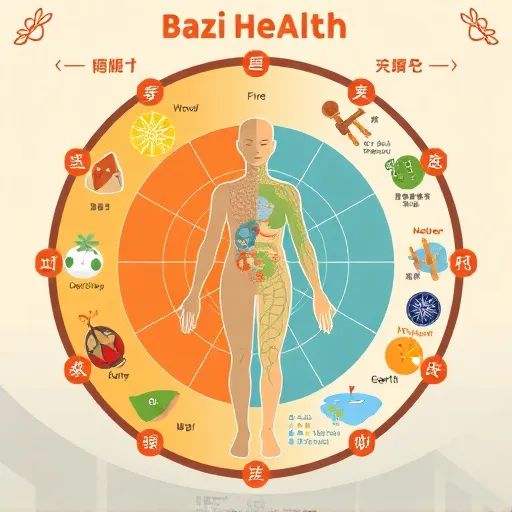
Five Elements map to
Why Bazi and Health Are Connected in the First Place
So here's the big idea behind how to read bazi chart for health: the very same Five Elements that shape your personality, career instincts, and relationship quirks also map onto your physical body. Pretty wild, right? In Chinese metaphysics, Wood, Fire, Earth, Metal, and Water each correspond to specific organs, bodily systems, and emotional states. When one element runs too strong, too weak, or gets attacked in a chart, the matching physical domain tends to show vulnerability. That's the whole foundation of how to read bazi chart for health — everything else is just refinement.
Think of the natal chart as a map of energetic balance. A balanced map suggests resilience. A lopsided map hints at areas where the body may need extra support. If you're serious about how to read bazi chart for health, you need to internalize this principle before touching anything else.
Identifying the Day Master and Its Constitutional Strength in Bazi Health Analysis
The day master is the heavenly stem sitting right above the day pillar. It represents the self — and in health analysis, it stands for your body's core constitution. When learning how to read bazi chart for health, everything radiates outward from this single character.
Your first job is figuring out whether the day master is strong or weak. This isn't about good versus bad. A strong day master isn't "better" than a weak one. What matters is how much support it gets from surrounding elements — a key checkpoint in how to read bazi chart for health.
- Strong day master: The body tends to have robust reserves but may overreact — think inflammation, excess heat, or stagnation and overflow patterns.
- Weak day master: The constitution may be more sensitive, with lower reserves and a tendency toward deficiency patterns — fatigue, poor circulation, weak digestion, or compromised immunity.
Practitioners assess strength through seasonal support (was the day master born in a season that feeds it?), root support (does it have allies in the branches?), and overall chart balance. A quick shortcut for how to read bazi chart for health: tally supporters versus drainers. For a Wood day master, supporters are Water and Wood; drainers are Fire, Earth, and Metal. That rough count gives you a surprisingly useful read on constitutional strength.
Mapping the Five Elements to Organ Systems and Body Functions
Once you know the day master and its strength, survey the elemental distribution across the whole chart. Here's the correspondence table every practitioner keeps in their head when doing how to read bazi chart for health:
- Wood: Liver and gallbladder, tendons and ligaments, eyes, smooth flow of the nervous system.
- Fire: Heart, small intestine, blood vessels, circulation, spirit and sleep quality.
- Earth: Spleen and stomach, digestion, muscles, metabolism, immune resilience.
- Metal: Lungs and large intestine, skin, respiratory function, elimination.
- Water: Kidneys and bladder, bones, endocrine system, reproductive health, vitality reserves.
Now count the elements. Which is dominant? Which is missing? Which is present but weak or clashed? A chart loaded with Fire and no Water isn't an automatic crisis — but it flags a pattern: restless sleep, inflammatory conditions, cardiovascular stress. A Water-heavy chart with minimal Fire may suggest cold patterns — sluggish circulation, low energy, dampness and stagnation. This is the heart of how to read bazi chart for health — reading tendencies, not diagnoses.
But raw counts are just the starting line. A single well-placed element can outwork three scattered ones. An element in the month pillar often carries more weight than one buried in the hour pillar. An element clashed or combined away may not function the way its raw presence suggests — a nuance that separates beginners from people who truly know how to read bazi chart for health.
Analyzing Elemental Interactions, Clashes, and Combinations in Chart Reading
Branch clashes are the most talked-about interactions in health analysis. A clash between the day branch and month branch can flag constitutional instability in the organ systems those branches represent. Year-branch clashes sometimes correlate with inherited health themes; hour-branch clashes may relate to later-life concerns or reproductive health.
The key to how to read bazi chart for health here is identifying which elements clash and which organ systems they map to. A Metal-Wood clash draws attention to the lung-liver axis — respiratory sensitivity plus nervous system tension. A Fire-Water clash points toward the heart-kidney axis: circulation, sleep, and stress regulation.
Combinations can strengthen or transform an element. A combination producing an already-excessive element amplifies its vulnerabilities; one producing a needed element can be protective. Experienced practitioners watch the useful god (yong shen) — the element that brings the chart into balance. If it's present and unimpeded, the constitution tends to be resilient. If it's absent or damaged, imbalances express themselves more readily in physical terms. That's why how to read bazi chart for health is never about one factor in isolation.
Reading the Four Pillars as Life Stages and Health Timelines
Each pillar corresponds to a phase of life, giving you a timeline of vulnerability and resilience:
- Year pillar: Childhood and inherited constitution — themes here often echo family patterns.
- Month pillar: Young adulthood and prime working years — heavy weight in constitutional analysis.
- Day pillar: Middle age and the self — the day branch reveals the body's core operating mode.
- Hour pillar: Later life and legacy — patterns often manifest in the second half of life.
When a pillar holds an element that's excessive or stressed elsewhere, that life stage brings the theme forward. A Fire-heavy month pillar with a Water-deficient day pillar? The prime working years are when cardiovascular and stress-related patterns show up most — and when preventive habits matter most.
Bringing in the Luck Pillars and Annual Pillars for Predictive Health Timing
The natal chart shows the baseline; the luck pillars (da yun) show how it shifts. Each spans roughly ten years and introduces new elemental influences. This is where how to read bazi chart for health becomes genuinely predictive — when a luck pillar reinforces an existing imbalance, that decade highlights the related health themes. When it brings the useful god, the decade feels more resilient.
Watch for luck pillars that clash with the day pillar, repeat an excessive element, or activate a combination involving the day branch. These are the periods where rest, nutrition, and preventive care pay the highest dividends. The annual pillar layers another influence on top — when it reinforces a flagged pattern, that year deserves attention; when it introduces balance, expect recovery or stabilization.
Synthesizing Constitutional Patterns Instead of Isolated Signals in Bazi Health Reading
Here's the most important habit for anyone mastering how to read bazi chart for health: never conclude from a single factor. A missing element alone means little. A clash alone means little. What matters is signal convergence. A robust analysis sounds like: "The day master is weak, the chart is Water-dominant, the day branch is clashed by the month branch, and the useful god is Fire. This suggests a cold, sluggish constitution with kidney and digestive vulnerability — warmth and movement are supportive." That's the synthesis level to aim for with how to read bazi chart for health — tendencies, strengths, and areas that deserve attention, never disease predictions.
Practical Tips and Common Mistakes in Bazi Health Analysis for Preventive Care
Match lifestyle to constitution: a cold, Water-heavy chart benefits from warming foods and sunlight; a hot, Fire-heavy chart from cooling foods and deliberate rest. Use seasonal transitions — if your chart flags Wood imbalance, spring is when liver and nervous system health deserve extra attention. Track patterns in a journal and use insights as conversation starters with healthcare providers — never as a replacement for professional medical evaluation.
Beginners learning how to read bazi chart for health make predictable errors: over-weighting a single missing element, ignoring the useful god, treating clashes as purely negative (they create movement and activation!), forgetting the luck pillars, and making medical claims. Avoid these and your chart reading stays both useful and honest.