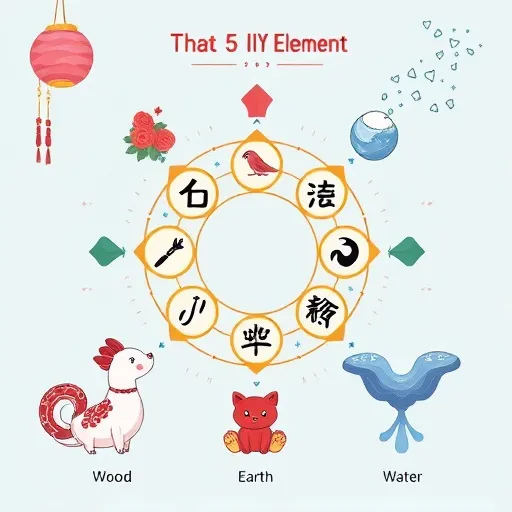
Five core elements o
The Five Elements: The Building Blocks of Chinese Astrology
Before you can pin down what is my chinese zodiac element, you've gotta understand the foundation everything else sits on. Chinese astrology runs on five core elements: Wood, Fire, Earth, Metal, and Water. These aren't just literal substances — they're energetic forces, personality blueprints, and life energies that constantly interact in an endless loop. Think of them as the five flavors that season every zodiac sign.
- Wood — growth, creativity, flexibility, and ambition
- Fire — passion, charisma, energy, and transformation
- Earth — stability, patience, nurturing, and practicality
- Metal — discipline, precision, righteousness, and resilience
- Water — wisdom, intuition, adaptability, and deep emotion
Each element also links to a direction, a season, a color, and even a specific organ in traditional medicine. And here's the cool part: the five elements never operate solo. They generate and control each other through what's called the productive cycle and the destructive cycle. Grasping this interplay is honestly the key to decoding what is my chinese zodiac element and how it shapes your whole personality picture.
How the Chinese Zodiac Element System and 60-Year Cycle Actually Work Together
This is where things get genuinely fascinating. The Chinese zodiac doesn't just run on the familiar 12-year animal cycle — it operates on a full 60-year cycle. Why? Because every year is defined by both an animal and one of the five elements. So while you probably already know your zodiac animal (Rat, Ox, Tiger, Dragon, whatever), your element adds a whole new dimension to the story.
Each element pairs with a year in a repeating pattern of ten: Wood, Fire, Earth, Metal, Water — each showing up twice, once in yang form and once in yin form. That's why you hear terms like "Yang Wood" or "Yin Fire." The yin-yang pairing doubles the five elements into ten, and when you multiply that by the twelve animals, you land on the complete 60-year cycle. Pretty elegant, right?
So if you were born in 2026, for example, you're in a Fire year — specifically Yang Fire — paired with the Horse animal. That combo creates a seriously dynamic signature. But hang tight, we'll dig into that in a sec.
Finding What Is My Chinese Zodiac Element: A Simple Step-by-Step Walkthrough
Ready to figure out what is my chinese zodiac element? Here's the easiest way to do it. Your zodiac element comes from your birth year — not your birth month or day (though advanced practitioners do factor those in for deeper readings).
Step 1: Identify your birth year. Find the year you were born. Quick heads-up: Chinese New Year — usually falling between late January and mid-February — marks the start of a new zodiac year. So if you were born in January or early February, you might actually belong to the previous year's animal and element. Double-check before you commit!
Step 2: Match your year to an element. Each year ends in a digit that corresponds to a specific element. Here's the cheat sheet:
- Years ending in 0 or 1 → Metal
- Years ending in 2 or 3 → Water
- Years ending in 4 or 5 → Wood
- Years ending in 6 or 7 → Fire
- Years ending in 8 or 9 → Earth
So if you were born in 2026, your year ends in 6 — meaning you're a Fire element. Born in 1998? That year ends in 8, making you an Earth element. See how simple this is?
Step 3: Understand yin vs. yang. Each element also carries a yin or yang polarity. Even-ending years (like 2026, 2028, 1990) are typically yang, while odd-ending years are yin. Yang energy is outward, active, and expressive; yin energy is inward, receptive, and reflective. This polarity shapes how your element expresses itself — and it's a detail a lot of folks miss when they first ask what is my chinese zodiac element.
What Each Element Reveals About Your Personality and Relationships
Now that you know how to calculate your element, let's explore what each one means for your personality, strengths, and even your relationships. Just remember: Chinese astrology treats elements as tendencies, not rigid definitions. Think of them as a lens, not a label.
Wood — The Visionary Grower. If you're a Wood element, you're probably a natural planner and dreamer. Wood types are creative, ambitious, and always reaching upward and outward, like a tree stretching toward the sun. You thrive on personal growth, love starting new projects, and get restless when stuck in a rut. Your challenge? Staying flexible when plans shift — because even the mightiest tree bends in a storm.
Fire — The Passionate Spark. Fire types are magnetic, enthusiastic, and full of life. If you're a Fire element, you probably light up a room, inspire others with your energy, and dive into new experiences with full commitment. You're a natural communicator and often the heart of your social circle. The flip side? Fire burns hot and fast, so pacing yourself and avoiding burnout matters. In 2026 — a Fire year — this energy is especially prominent, making it a bold time for Fire natives to shine.
Earth — The Steady Anchor. Earth types are the reliable, grounded souls of the zodiac. If you're an Earth element, you value stability, loyalty, and practicality. You're the friend everyone calls for sound advice, and you build things slowly but surely. Earth natives are nurturing, patient, and deeply dependable. Your growth edge? Loosening your grip on control and embracing a little spontaneity now and then.
Metal — The Refined Strategist. Metal types are disciplined, sharp, and principled. If you're a Metal element, you probably hold high standards — for yourself and others — and have a strong sense of justice. You're organized, focused, and great at cutting through noise to find the truth. Metal natives make excellent leaders and problem-solvers. Your challenge is staying flexible and not letting perfectionism block progress.
Water — The Intuitive Explorer. Water types are wise, adaptable, and deeply empathetic. If you're a Water element, you likely have a rich inner life, strong intuition, and the ability to flow around obstacles that would stop others cold. Water natives are thoughtful listeners, creative thinkers, and often drawn to spiritual or philosophical pursuits. Your growth area? Setting boundaries and dodging emotional overwhelm.
The 2026 Yang Fire Horse Year and Why It Amplifies Your Elemental Reading
Since we're sitting in 2026, it's worth noting that this year is a Yang Fire year paired with the Horse. In Chinese astrology, Fire and Horse combine into a highly dynamic, energetic, fast-moving signature. Many practitioners see 2026 as a year that favors bold action, visibility, and rapid change — great news for Fire and Wood natives who thrive on momentum, while Earth and Metal types may want to pace themselves and stay grounded.
If you've been curious about what is my chinese zodiac element, 2026 is actually a wonderful time to explore it. The heightened Fire energy tends to amplify self-reflection and personal growth, making it an ideal year for diving into astrology and discovering more about your innate tendencies.
Element Compatibility: How the Productive and Controlling Cycles Shape Your Relationships
One of the most fascinating aspects of the five-element system is how elements relate to one another. Understanding these dynamics can offer real insight into your relationships, career choices, and even your health.
- Productive cycle: Wood feeds Fire, Fire creates Earth (ash), Earth bears Metal, Metal carries Water, Water nourishes Wood. Elements in this cycle support and strengthen one another.
- Controlling cycle: Wood parts Earth, Earth absorbs Water, Water extinguishes Fire, Fire melts Metal, Metal cuts Wood. These relationships create balance through tension.
In practice, if you're a Fire native, you might feel especially supported by Wood types and naturally challenged by Water types. It's not about good or bad — it's about understanding the energetic push and pull in your relationships. This is another layer that makes the question of what is my chinese zodiac element so much richer than a simple personality quiz.
Going Deeper With BaZi and the Four Pillars of Destiny
While your birth year gives you your primary zodiac element, some practitioners take things further by analyzing your BaZi (Four Pillars of Destiny) chart. This involves looking at the year, month, day, and hour of your birth to determine a full elemental profile — and it can reveal way more nuance than the year alone.
For instance, someone born in a Fire year might still have a dominant Water influence if they were born in a Water month or hour. That's why two people with the same zodiac animal and element can still have wildly different personalities. If you find yourself drawn to this system, exploring your full chart with a knowledgeable practitioner can be incredibly rewarding — and it answers what is my chinese zodiac element on a much deeper level.
Common Misconceptions About the Chinese Zodiac Element System
Let's clear up a few things that often confuse people new to this system.
Myth #1: Your element is the same as your zodiac animal. Not true. Your animal and your element are two separate layers that combine to form your full zodiac signature. A Dragon can be a Wood Dragon, a Fire Dragon, or any of the other elements depending on the year.
Myth #2: Your element never changes. Your birth element doesn't change, but the yearly element does — and many practitioners believe each year's element influences your fortunes during that year. So even if you're a Water native, 2026's Fire energy will still affect your experience.
Myth #3: Certain elements are "better" than others. Every element has strengths and weaknesses. There's no hierarchy — just different expressions of energy that suit different situations and temperaments. Asking what is my chinese zodiac element isn't about ranking yourself; it's about understanding yourself.
Practical Ways to Work With Your Element in Daily Life
Once you know your element, you can start weaving that awareness into your everyday routine. Here are a few simple ideas:
- Wood natives: Surround yourself with plants, spend time in nature, and set clear growth goals.
- Fire natives: Lean into visibility — take the stage, share your ideas, and channel your passion into creative projects.
- Earth natives: Create routines and rituals that ground you, and make time for home and family.
- Metal natives: Declutter your space, sharpen your skills, and practice mindful precision in your work.
- Water natives: Prioritize rest, journaling, and time near water to recharge your intuitive energy.
Many people also use colors, directions, and even career choices aligned with their element to bring more harmony into their lives. Whether or not you buy into the energetic side of things, these practices can serve as helpful reminders of the qualities you want to cultivate. And honestly, that's the real payoff of learning what is my chinese zodiac element — it gives you a practical compass for everyday decisions.
So whether you're a passionate Fire, a steady Earth, a visionary Wood, a sharp Metal, or a wise Water, treat your element as a gentle guide toward greater self-awareness. The more you learn about the five elements — and revisit the question of what is my chinese zodiac element — the more layers of insight you'll uncover. Your zodiac element is just the beginning of one seriously rewarding adventure.